LOGLINE
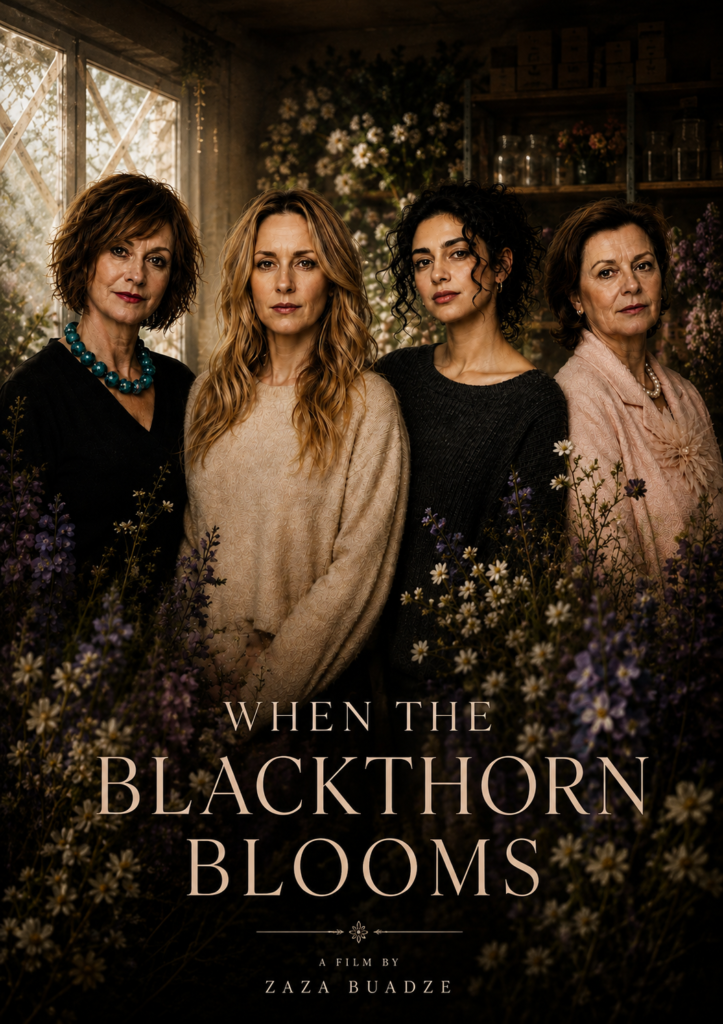
Russian propaganda claimed that their military would be greeted with flowers in Ukraine. They were cruelly mistaken. Four fragile women-florists from the Kyiv flower shop go through an incredible ordeal of war, becoming an ironclad support for others. They choose different ways to defend the Motherland, but they have the same desire to show the aggressor that they will not be welcomed with flowers in Ukraine.
CREDITS:
Production company: PSB FILMS (Ukraine), FATT PRODUCTION (The Netherlands)
Director: ZAZA BUADZE
Writer: IVAN TIMSHYN
Producers: BELLA TERZI (Ukraine), ELWIN LOOIJE (The Netherlands)
LOCATIONS:
Kyiv, Ukraine
Amsterdam, The Netherlands
SYNOPSIS:
It is the story of four women who worked in a flower shop in Kyiv downtown before the full-scale war. Though different in age, social status, and outlook, they share a love for flowers and a desire to bring beauty.
None of them believed war would really come — Oleksandra, the shop owner, had even ordered flowers from the Netherlands for March 8. But on February 24, their world collapses, and each is pulled into her own storm.
OLEKSANDRA (51), the owner, becomes a volunteer and turns her shop into a medical hub. SOFIA (35), a florist, flees with her two children to the Netherlands, where their Dutch partners offer shelter. NIKA(23), a florist with Greek roots, tries to evacuate her parents from occupied Mariupol. NADIIA (64), who once believed life was better in Russia, is trapped during the battle for Irpin’ and contact with her is lost.
Oleksandra’s diabetic mother needs medicine, but pharmacies are empty. Oleksandra arranges the delivery of essential drugs from Europe for both military and civilians. The first batch of medicine is brought by Max (53), a Kyiv-born man who moved to Europe many years ago. He stays and begins helping Oleksandra.
Four years ago, Nika left medical university in Mariupol, breaking with her parents to pursue floristry. Now survival and reunion matter more than old resentments. Her parents are brought out of Mariupol by Misha (28), her father’s former student and Nika’s ex-boyfriend. Their feelings flare up again.
Sofia faces refugee life, with children confused by events. Physically she is in Europe, but emotionally in Ukraine. Oleksandra urges her to settle there, as the war may last, but Sofia dreams of returning after her husband joins the army.
Oleksandra’s Dutch partners ask what to do with the pre-paid flowers. Sofia’s daughter suggests turning the flowers into medicine by holding a charity sale in the city square. Thousands of Europeans buy flowers to support Ukraine, continuing to donate even after the flowers sell out.
Oleksandra’s mother dies. After the funeral, Max looks after Oleksandra. Overwhelmed by grief, she suddenly kisses him, and they become intimate.
Nika tells her parents that Misha and she are going to the front as medics.
In April, Russian troops withdraw from Kyiv. Oleksandra goes to Irpi’ and finds survived Nadiia. The two women embrace and cry.
Max believes he and Oleksandra have become a couple, but she insists this is “not the time.” Hurt, Max confronts her, saying that after tragically losing someone he loved, he learned not to fear life, because it can end in a moment.
Oleksandra reopens the flower shop, keeping the volunteer hub inside. Sofia returns to Kyiv with her children, brings medicine and resumes the work she loves. Nadiia is also back to work.
In early May, Nika marries Misha. They are both in military uniforms. Nika holds a beautiful bouquet, surrounded by family and friends — Oleksandra, Sofia, Nadiia and Max among them.
Outside, Nika throws the bouquet. Freeze frame. The beautiful bouquet of flowers hangs in the air against a bright blue, almost peaceful sky.
CREDITS.
During the credits, documentary footage from the first months of the war with real women appears: women refugees with children, women volunteers, animal rescue activists, women weaving camouflage nets, women drivers, women soldiers, a nursing mother with her baby in the Kyiv metro, emergency psychologists at bombed sites, women doctors and many others.
The credits roll to a contemporary arrangement of the well-known Ukrainian folk song The Blackthorn Blooms. https://www.youtube.com/watch?v=1b4KhRvlbJI